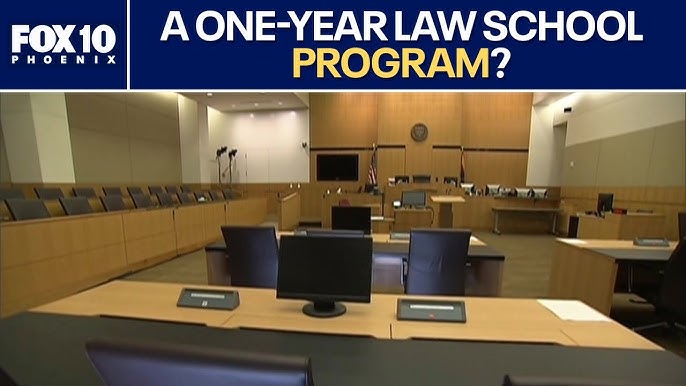

Alternative Legal Training Amid Attorney Shortage in Arizona: A Critical Look
This opinion editorial examines Arizona’s possible shift in its legal training approach—one that could allow individuals with only one year of law school education to represent clients in criminal cases. At the heart of this debate is a response to Arizona’s lawyer shortage, which ranks the state nearly last in the nation for attorneys per capita. With both enthusiastic supporters and vocal critics weighing in, this proposal is stirring up discussions on how best to address the state’s need for legal professionals while ensuring that quality and competency are not compromised.
The discussion centers on a proposed “Master of Legal Studies Criminal Law” program. Under the proposal, graduates would complete just one year of focused legal studies on criminal law and then receive one to two years of supervision by a seasoned attorney. Supporters argue that this new track will provide a more direct route to meeting the urgent demand for legal practitioners—especially in rural areas of Arizona. Conversely, opponents worry that the abbreviated curriculum might leave potential practitioners without the necessary foundation in the tricky parts of law that accompany serious criminal representation.
Understanding the Lawyer Shortage in Arizona
Arizona’s shortage of legal professionals is a well-known issue. Ranking 49th out of 50 states in the number of attorneys per capita, the state has long struggled to attract and retain legal talent. This scarcity is most pronounced in rural communities, where residents often face the double challenge of limited access to legal services and a heavy reliance on a small pool of professionals.
One of the key arguments for the new program is that it could provide an alternative pathway for individuals who are passionate about criminal law and who aim to fill the critical gap in underserved areas. By carving out a specialized track, the state hopes to cultivate a cadre of legal advocates who are well-prepared to handle criminal cases—even if they may not have the breadth of knowledge that traditional three-year Juris Doctor programs provide.
Examining the Attorney Deficit and Its Effects
The lawyer shortage in Arizona is more than a numbers game—it directly affects the delivery of justice. With fewer attorneys available to represent clients, particularly in criminal matters, the legal system may struggle with delays and reduced access for defendants. This situation can exacerbate issues in community safety and fairness in legal proceedings.
Here are some of the effects observed in communities facing legal shortages:
- Delayed Legal Proceedings: Court cases may experience unnecessary delays, prolonging uncertainty for defendants and victims alike.
- Overburdened Attorneys: Existing legal professionals often face overwhelming caseloads, which can lead to burnout and reduced effectiveness.
- Access Gaps in Rural Areas: Rural communities, already struggling with fewer resources, see an even sharper impact where legal help is scarce.
Comparing Traditional Legal Education to the Proposed Program
Traditional legal education is designed to cover a broad range of law—from criminal to civil, probate, and beyond. A Juris Doctor program, usually lasting three years, provides students with deep exposure to the wide range of legal issues that surface in everyday practice. This well-rounded education is seen as essential by many experts who argue that knowing the fine points across different legal areas is key to representing clients effectively.
The proposed program, by contrast, is more targeted. It offers a condensed curriculum focused almost exclusively on criminal law. Supporters contend that graduates will emerge with a sharp focus on the specific demands and pitfalls of criminal representation, potentially even outperforming those from traditional programs in purely criminal cases. They also note that the post-course supervision—lasting one to two years—adds a layer of practical oversight that could bolster the confidence of new practitioners.
| Aspect | Traditional Juris Doctor Program | Proposed Master of Legal Studies Criminal Law |
|---|---|---|
| Duration | 3 years of law school | 1 year of focused study + 1-2 years of supervision |
| Curriculum Breadth | Covers multiple legal fields (civil, probate, corporate, etc.) | Focused exclusively on criminal law |
| Practical Training | Internships, clinics, and moot courts | Supervised practice after coursework |
| Outcome | Larger skill set in varied legal areas | Potentially stronger specialization in criminal law |
This comparison table highlights the significant differences that proponents and detractors of the proposal consider when contemplating a shift in legal education. While the simpler, focused approach might be seen as an efficient solution to a pressing problem, it also comes with a trade-off regarding the coverage of the tangled issues that intersect in many legal scenarios.
Critics’ Concerns: Are We Overlooking the Nitty-Gritty?
Critics from within the legal community have voiced strong reservations about the proposal. Pinal County Attorney Brad Miller, for example, dismissed the idea as “foolish,” questioning the rationale behind bypassing a more extensive legal education. His core concern centers on whether one year of focused legal study can adequately cover the subtle parts of law that are crucial when defending someone facing severe criminal charges.
Similarly, Pima County Attorney Laura Conover has expressed her worry that lowering the bar for criminal defense practitioners might lead to a diminished standard of care compared to the intricate attention required in drafting legally binding documents like wills. For many, the key and challenging elements of law—those little details that often make or break a case—cannot be hurriedly taught or completely streamlined into an abbreviated course. They argue that the analytical skills developed through a traditional legal education are not just academic but are essential tools for navigating the unpredictable twists and turns of real-world criminal cases.
Key Issues Highlighted by Skeptics
The skeptics have raised several points, which can be summarized as follows:
- Insufficient Breadth: Critics are worried that a one-year program might omit exposure to different legal contexts, leaving practitioners with a narrow view.
- Risk of Oversimplification: The pressure to streamline training might result in missing out on the challenging parts of legal principles and case law that require deeper investigation.
- Potential Impact on Case Outcomes: With less comprehensive training, there is an elevated risk of missteps in the courtroom, which could negatively affect defendants and the legal system as a whole.
These points are not without merit when one considers that defense in criminal law often involves working through confusing bits of legal precedent, piecing together a cohesive argument from a multitude of related issues, and sometimes reconciling conflicting legal standards within a single case. In this context, the proposal is seen as a potentially risky shortcut that might fail to capture the full spectrum of necessary skills.
Opportunities for Rural Areas: A Closer Look at the Impact
On the other side of the argument, many advocates view the proposal as a promising way to alleviate severe legal staffing shortages, particularly in rural communities. Rural areas of Arizona, which have traditionally seen limited access to legal services, could benefit immensely from legal professionals who, while coming from a shortened course, have been immersed in the specifics of criminal law.
Supporters like Dave Byers, the Administrative Director of the Courts for the Arizona Supreme Court, argue that these new legal practitioners could fill a critical gap. By focusing their training on the essential elements of criminal law, these individuals might be better equipped to serve in regions where full-spectrum legal services are just not available. Byers draws a parallel with the medical field, where varying levels of practitioners—from EMTs to nurse practitioners—play different yet complementary roles in serving patient needs.
Benefits of Focused Legal Training for Rural Communities
Rural communities might see several potential benefits from an alternative legal training model:
- Enhanced Access to Justice: More legal professionals in rural regions means that residents could get timely legal help, reducing backlog in criminal cases.
- Practical Skill Emphasis: The supervision period could offer hands-on insights and practical experience tailored to the realities of representing clients in smaller communities.
- Filling the Staffing Void: A more accessible pathway into legal practice may encourage individuals from rural backgrounds to pursue careers in criminal law, creating a cycle of local empowerment and improved legal services.
Case Study: Impact on a Rural Arizona County
Consider a hypothetical rural Arizona county where the only available criminal defense attorney is overwhelmed by a growing caseload. The introduction of a new legal professional trained through the condensed program might not have every nuance of traditional legal education, but the immediate impact could be a more prompt and approachable legal process for residents. These individuals, being coached under close supervision, could ease the pressure on the sole practitioner and contribute significantly to court efficiency.
Drawing Parallels with Other Professions
Supporters of the proposed program often compare the idea to alternative tracks within other professions—most notably, the medical field. Just as nurse practitioners or paramedics work alongside doctors to deliver necessary healthcare, alternative legal practitioners could work in tandem with traditionally trained attorneys. This tiered approach might allow for a more flexible system where each professional has a clearly defined role based on their training and expertise.
Below is a simplified comparison to illustrate this point:
| Profession | Tier I (Traditional Training) | Tier II (Alternative Pathway) |
|---|---|---|
| Medicine | Medical Doctors with extensive training | Nurse Practitioners, Physician Assistants with focused training |
| Law | Juris Doctor Graduates with broad legal education | Criminal Law Specialists with focused one-year training and supervision |
This table underscores the potential for a collaborative approach where both tiers benefit the overall system by focusing on their specific strengths. Proponents argue that such differentiation could be key to addressing the shortage without compromising the responsibility and effectiveness required in criminal law.
Balancing Training and Competence: Finding a Middle Path
At the center of the debate is the need to find a balance between rapid workforce expansion and maintaining high standards of legal service. The proposed program aims to deliver focused education in the field of criminal law while mitigating the risk of under-preparation through a mandatory period of supervised practice. However, critics remain unconvinced that the supervision component alone can replace a well-rounded, traditional education.
Legal issues are rarely black and white; they are made up of numerous subtle details that require a deep understanding of various legal domains. Even within criminal law, the twists and turns of courtroom dynamics demand more than just procedural knowledge—they require the ability to think critically, to figure a path through competing interests, and to appreciate the small distinctions that can change the outcome of a case.
Regulatory and Ethical Considerations
An essential component of the debate concerns the regulatory and ethical implications of introducing a new tier of legal practitioners. Questions abound regarding how these new professionals would be labeled and integrated into Arizona’s existing legal framework. Would they be permitted to handle serious charges independently, or would their scope of practice be limited? And what kind of accountability measures would be put in place to assure the public of their competence?
Several key concerns include:
- Standardization of Supervision: Ensuring consistent and rigorous oversight during the one to two-year mentorship period is crucial.
- Ethical Protocols: Adjustments in ethical standards may be necessary to reflect the unique training background of these alternative practitioners.
- Title and Professional Identity: Clarity around the designation of these new entrants in the legal profession will affect both client perceptions and inter-professional dynamics.
Arizona Chief Justice Ann Scott Timmer has acknowledged the creative appeal of the proposal but also highlighted the indispensable role of traditional legal schooling in honing analytical skills. As she aptly pointed out, “It’s not a trade school,” emphasizing that the full spectrum of legal analysis—beyond mere procedural know-how—is essential for sound legal practice.
Ensuring Accountability While Innovating
The legal community must ensure that any innovation does not sacrifice accountability for speed. In the context of criminal defense, even small missteps can have profound consequences. Here are steps that regulators and educational institutes might consider:
- Robust Mentorship Programs: Involve experienced attorneys who personify best practices in criminal law to mentor new practitioners.
- Regular Competency Assessments: Implement ongoing evaluation measures that move beyond initial certification to ensure sustained competence.
- Clear Limitations on Practice: Define the boundaries of practice clearly, allowing alternative practitioners to handle specific types of cases while complex or borderline issues are escalated to traditionally trained lawyers.
An approach that encompasses these measures might strike a balance between the urgent need for more legal professionals and the equally important need to preserve the standards of judicial representation. This middle path could foster an environment where innovation in legal training is accompanied by precise safeguards against potential pitfalls.
Looking Forward: The Future of Criminal Legal Representation in Arizona
The proposal to introduce a one-year law school alternative for criminal cases has certainly energized debates within Arizona’s legal circles. Supporters anticipate that this program could soon be a super important step toward addressing a pressing shortage, while critics caution that it might overlook the hidden complexities inherent to legal practice. As this proposal moves through its research stage and edges closer to a potential presentation to the Arizona Supreme Court, its implications will undoubtedly ripple through the adversarial world of criminal law.
In essence, the initiative is a reflection of a broader trend across many industries—a willingness to question longstanding traditions in favor of potentially more efficient, specialized models. The legal profession, much like other fields that have embraced tiered training models, stands at a crossroads where the need for rapid adaptation collides with the responsibility to maintain high professional standards.
Considerations for the Legal Community
As Arizona contemplates this new path, stakeholders across the state must consider several key factors:
- Demand vs. Quality: How can the legal system rapidly respond to staffing shortages while ensuring that every practitioner is thoroughly equipped to manage the nerve-racking challenges of criminal defense?
- Educational Rigor: Is it possible to condense the essential lessons of legal theory and practice into a one-year program without losing the essence of what makes a formidable attorney?
- Public Perception: Would clients feel confident being represented by a practitioner with such a focused background, and what steps can be taken to build trust?
These considerations revolve around finding the right balance between innovation and caution, ensuring that legal reforms both address immediate needs and set a strong foundation for the future. All parties—ranging from experienced county attorneys to supportive administrative directors—must work together to manage their way through this change.
Potential Scenarios and Long-Term Effects
Looking ahead, there are several potential scenarios that could arise from the implementation of such a program. For instance, should the initiative prove successful in rural areas, other states facing similar shortages might consider adopting a parallel model. On the other hand, if early experiments reveal that the abbreviated training leaves practitioners ill-prepared for the tricky parts of complex legal disputes, there may be significant calls for recalibration.
Some long-term effects to watch for include:
- Shift in Legal Education Norms: A successful pilot could encourage law schools to reassess the structure of their programs, incorporating more practical, targeted training modules.
- Enhanced Court Efficiency: With more legal professionals available, especially in rural settings, delays in criminal proceedings could reduce markedly, benefiting both defendants and the broader justice system.
- Adaptations in Legal Ethics and Regulation: As alternative paths become more common, regulatory bodies might need to innovate their frameworks, ensuring that standards remain high while embracing new training methods.
In sum, Arizona’s potential move reflects a broader willingness to poke around at conventional practices in favor of more streamlined, yet focused, alternatives. The road ahead is undoubtedly filled with challenging bits and tangled issues, but the proposal also offers a new beginning for areas long left on edge due to a lack of legal professionals.
Conclusion: Weighing Innovation Against Tradition
Arizona’s proposal to allow individuals with one year of focused legal training to represent clients in criminal cases is a bold experiment that epitomizes the modern challenge of balancing innovation with tradition. While the advantages include addressing the immediate shortage of legal professionals and potentially improving access to justice in underserved communities, the concerns raised by experienced legal minds cannot be overlooked.
The debate is ultimately about finding a middle ground—one where efficiency and speed do not compromise the quality of justice. For supporters, the specialized program represents an essential and timely solution to fill a critical gap. For detractors, the risks associated with bypassing the broader educational experience of traditional law school remain too significant to ignore.
As Arizona’s legal community continues to sort out these issues, one thing is clear: the challenges are as nerve-racking as they are complicated, and every decision made now will likely influence the very foundation of criminal legal representation in the state for decades to come. Whether this alternative training model ultimately proves to be a success or a cautionary tale, its development offers valuable lessons about innovation, accountability, and the enduring need for comprehensive legal training—even in a rapidly evolving world.
For those following the progress of this initiative, staying informed and engaged will be critical. By working through the obvious challenges and the subtler issues hand in hand, Arizona may well set a precedent for how states across the nation tackle similar shortages—with both creativity and caution guiding the way.
Originally Post From https://hoodline.com/2025/09/arizona-considers-allowing-individuals-with-one-year-of-law-school-to-represent-criminal-cases-amid-attorney-shortage/
Read more about this topic at
Trump’s shortcut rulemaking is shortchanging all of us
MDL Procedural Shortcuts Once Again Disadvantage …