
Republican Debate in CD7: A Closer Look at the Tensions and Turning Points
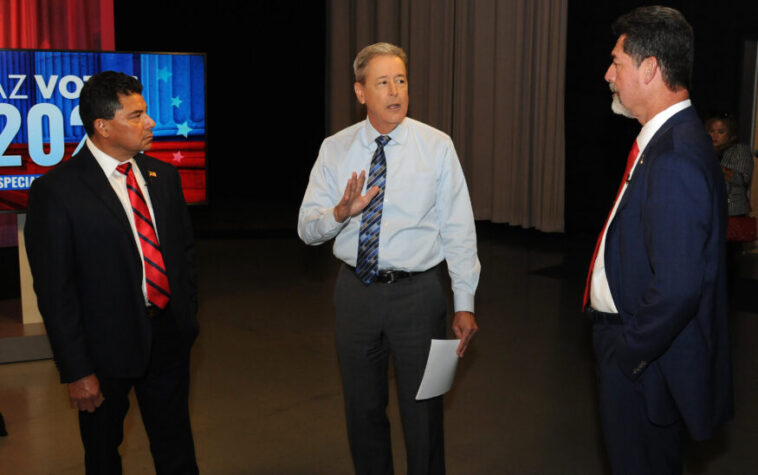
The recent debate among the three Republican candidates for Congressional District 7 has provided an intriguing glimpse into the tangled issues and twists and turns shaping the political landscape of Southern Arizona. Held at the AZPM studios on the evening of June 9, 2025, the event not only spotlighted the candidates’ stances on immigration and federal spending but also underscored their differing personal histories and visions for the district. In this opinion editorial, we take a closer look at the debate’s key elements, examining everything from the controversial proposals on housing and work camps to the rising tensions over immigration policies and budget cuts.
With voters in this predominantly Democratic district watching closely, the debate served as a reminder of how political theatrics, personal narratives, and policy proposals intertwine in a nerve-racking contest for support. Let’s dig into the defining moments and core issues that emerged during this politically charged event.
Examining Immigration Policies and Border Security Proposals in CD7
One of the central topics that kept debates ticking was the candidates’ approaches to immigration – a subject that has long been both intimidating and highly politicized. Each candidate expressed a certain degree of admiration for the border policies put forward by the Trump Administration, with an emphasis on safeguarding national security and limiting illegal immigration.
During the debate, Jorge Rivas was especially vocal, suggesting measures that veered into bold territory. His proposal included the possibility of imposing a death penalty on those involved in drug trafficking—a suggestion that he believes would lead to significantly reduced drug circulation on the streets. Rivas argued that “a few months of targeted media campaigns could, in time, save thousands of lives by dramatically cutting down the presence of drugs.”
This viewpoint illustrates the candidates’ attempt to find your way through the challenging bits of public safety and law enforcement. However, it also opens up a discussion on whether such radical measures are justified in a district that is already laden with problems and on edge regarding federal policies.
- Border security remains a critical issue in CD7, a district that touches nearly all of the Arizona-Mexico border.
- The proposed policies suggest a hardline approach, aligning closely with national Republican sentiments.
- The debate highlighted a clear willingness among the candidates to echo and intensify measures championed at the federal level.
Critics argue that such proposals may be too extreme given the delicate balance needed to address the underlying causes of illegal immigration, and finding a balanced approach is arguably key as the nation grapples with its very own multitude of small distinctions inherent in immigration policy.
Exploring the Impact of Temporary Work Visas on Local Industries
Another central theme of discussion was the impact of immigration policy on Arizona’s labor force, particularly in sectors like construction and agriculture. Political newcomer Jimmy Rodriguez raised concerns about the potential economic fallout should temporary legal work status be stripped away from undocumented workers.
Rodriguez pointed out that approximately 25% of construction workers and almost half of the farm laborers in the district are undocumented. His argument centers on the idea that abruptly removing these workers from the workforce would wreak havoc on local industries that are already grappling with a range of challenging parts in labor supply.
Rodriguez’s stance brings to light the overlapping tensions between strict border security measures and ensuring economic stability for industries that are vital to Arizona’s prosperity. Supporting this perspective calls for a nuanced understanding of how immigration policies can simultaneously safeguard borders while supporting local economies. To help visualize these points, consider the following table:
| Industry | Estimated Percentage of Undocumented Workers | Potential Impact if Removed |
|---|---|---|
| Construction | 25% | Severe labor shortages and increased project costs |
| Agriculture | 48% | Significant disruptions in food production and higher prices |
The table above underscores the nerve-racking dilemma policymakers face: implementing rigorous immigration reforms without inadvertently destabilizing key economic sectors. It is a delicate trade-off between protecting national interests and supporting regional economies—a challenge that remains one of the complicated pieces in the larger immigration puzzle.
Analyzing Proposals for Addressing the Housing Crisis
Arguably, one of the most controversial proposals discussed during the debate was the suggestion to send homeless individuals to work camps in empty prisons. Candidate Daniel Butierez, a Tucson small business owner with experience both in managing a painting company and in employing individuals recently released from prison, passionately reiterated this idea. According to him, homelessness is often intertwined with drug abuse, and those who make the choice to engage in substance dependency should, in his view, be placed in a controlled environment that offers rehabilitation.
This proposal, however, raises numerous questions about human rights, the efficacy of forced rehabilitation, and the ethics behind utilizing incarceration facilities as a temporary solution for homelessness. The idea has sparked heated debate, with many questioning whether such an approach respects the dignity of those affected by homelessness. The tension was palpable when candidate Jimmy Rodriguez distanced himself from both Rivas’ extreme proposals and Butierez’ work camp idea.
- The concept of work camps intersects with both social justice and public policy, challenging conventional ways of approaching the homelessness crisis.
- Critics argue that using prison infrastructure as a solution only serves to further marginalize already vulnerable individuals.
- The debate emphasizes the entrenched conflicts among policy proposals, highlighting the challenge of balancing law enforcement with social care.
The issue touches on many tricky parts that policymakers are still trying to sort out. On one hand, there is the desperate need to address the skyrocketing housing crisis in parts of southern Arizona, and on the other, the potential for such proposals to create additional legal and social complications that are off-putting to progressive voters.
Federal Spending Cuts: The “Big Beautiful Bill” and Its Wider Implications
Another critical aspect that the candidates tackled was the federal spending package labeled the “Big Beautiful Bill.” This measure includes billions of dollars in cuts to essential public programs such as Medicaid and Medicare—programs that are super important for up to 200,000 residents in CD7 who rely on them for health coverage.
Daniel Butierez defended the cuts, echoing a national Republican narrative that argues the package is tightly focused on eliminating fraud and abuse. In contrast, his fellow candidate, Jimmy Rodriguez, expressed caution toward cuts that might directly harm those who genuinely require such coverage. His nuanced stance highlights the small distinctions within the party’s approach to fiscal policy and public health programs.
Furthermore, the debate also allowed for a broader discussion on federal spending and its impact on local communities. Jorge Rivas, for instance, warned that rackety excess in federal spending could lead the nation down a perilous path, even if such measures might appear necessary in the short term to address budgetary imbalances.
These viewpoints expose a fundamental tension that is loaded with issues: how to strike a balance between curbing government excess and ensuring that vulnerable populations do not suffer from critical cuts. To provide clarity on these arguments, here is a bulleted list summarizing each candidate’s position on federal spending:
- Butierez: Supports the cuts, stressing that the focus is solely on eliminating misuse of funds and reducing waste.
- Rivas: Emphasizes the need for tough measures and some degree of sacrifice, but his approach risks appearing overly harsh.
- Rodriguez: Backs the idea of cuts if applied judiciously, with special consideration for those who are unable to work; calling for criteria that would require able-bodied individuals to demonstrate ongoing activity such as schooling or part-time employment.
This dialogue on federal spending illustrates the intricate balancing act that modern policymakers must figure a path through while contending with an ever-demanding electorate that lives through the impacts of these decisions on a daily basis.
Controversies and Confrontations: The Personal Histories and Practicalities of the Candidates
Beyond the policy proposals, the debate was also marked by a series of personal confrontations that illuminated the candidates’ divergent life experiences. One of the most charged moments arose when Jorge Rivas was forced to clarify discrepancies regarding his age at the time of fleeing El Salvador. He initially mentioned he was 17, but later corrected himself to say he was only 16. This small twist in the story quickly escalated into a showdown with candidate Butierez, who had his own troubled past marked by a long hiatus following a prison sentence and subsequent street life.
The exchange underlines the importance of credibility and consistency in political campaigns. When candidates share their personal journeys, voters are often not only evaluating their policy positions but also their ability to steer through the awkward bits of their own backgrounds. The frustration expressed by Butierez after Rivas’ comment — describing it as “nasty” and defending his own record of being wrongfully convicted — speaks volumes about the ongoing struggles many candidates face in managing their public personas.
This controversy, while replete with personal jabs, also highlights the many subtle details and fine points that candidates must consider when sharing their life stories on the public stage. In a climate where every word can be scrutinized, the debate over personal history becomes another battleground, one that is as complicated as it is nerve-racking.
The Collision of Personal Narratives and Public Policy
Political debates are often a blend of personal narrative and policy debate. In this particular contest, the candidates’ shared support for President Trump’s border policies created a unified front on one policy front, yet their differences in addressing other pressing issues revealed the multiple layers of complexity in their platforms.
On one hand, there was a clear willingness to adopt popular national postures – a method that can be seen as a tactical way to rally base support amid the competitive environment of the district. On the other hand, the personal stories that emerged, whether it was Butierez recounting his time on the streets or Rivas discussing his escape from tyranny and eventual naturalized citizenship, provided a human element that can resonate deeply with certain segments of the electorate.
These mixed messages mirror a broader trend in modern political debates where personal history is as important as policy prescription. The candidates’ attempts to balance emotive appeals with concrete proposals illustrate how challenging it is to manage every twist and turn in a political campaign.
Evaluating the Broader Impact of CD7’s Political Landscape
While the debate was dominated by the Republican candidates, the broader context must also be considered. Congressional District 7 is overwhelmingly Democratic, and the Republican challengers find themselves running uphill. With the Democratic field featuring candidates like Adelita Grijalva, Daniel Hernandez, Deja Foxx, Patrick Harris Sr., and José Malvido Jr., the political contest in CD7 is shaping up to be a clash of ideologies that reflect deep-seated divisions not only within the district but also in the state’s political fabric as a whole.
The upcoming Democratic debate on June 10, following the primary election call by Governor Katie Hobbs on July 15, and the general election on September 23, promises to add another layer of complexity. The stakes are high on all sides and the focus on issues like immigration, federal spending, and social policy will only intensify as voters assess the competing visions for the future.
The CD7 debate exemplifies a familiar phenomenon in American politics: the struggle to find your way amidst a maze of competing interests, personal histories, and policy proposals. As the candidates fashion their platforms in response to both local needs and national trends, the tensions within each proposed policy become a microcosm of larger national debates.
Key Takeaways for Voters in a Politically Charged Environment
For voters trying to get into the nitty-gritty of what each candidate stands for, there are several elements to consider. The debate not only showcased differing opinions on how to manage immigration, border security, and federal spending but also raised fundamental questions about the role of personal experience in political leadership.
Here are some bullet points summarizing the major takeaways from the debate:
- Border Security Policies: All candidates expressed support for stricter measures, with proposals that could include extreme penalties for drug trafficking. However, the potential social and legal implications of these measures remain hotly disputed.
- Immigration and Economic Impact: The discussion about temporary work visas illuminated the vital need to reconcile border policies with the economic realities of local labor markets, where undocumented workers play a key role.
- Public Health and Federal Spending: The candidates demonstrated contrasting perspectives on the cuts proposed by the “Big Beautiful Bill,” reminding voters of the delicate balance between fiscal responsibility and protecting vulnerable communities.
- Personal Histories and Credibility: The debate underscored how personal narratives affect a candidate’s credibility. In an era where every small twist in a biography can be magnified, candidates are under increasing pressure to present a consistent and authentic story.
For citizens trying to figure a path through these many competing narratives, it is clear that the political stress tests in this debate go far beyond simple policy discussions. They delve into the realm where personal identity, past experiences, and ideological commitments intersect in ways that are as complicated as they are nerve-racking.
The Role of Partisan Alignment in Shaping Debate Dynamics
This debate also offers a fascinating case study in how partisan loyalty can color the interpretation of policy proposals. In a district where Democrats significantly outnumber Republicans, the Republican candidates face an uphill battle. Their endorsements of policies that have strong national support among conservatives are likely to resonate with a base that already shares these values, but will they be persuasive to a broader electorate?
Partisan alignment here works as both a strength and a liability. On the one hand, it allows candidates to lean heavily on the national narrative established by figures like President Trump. On the other, it risks alienating moderate voters who are more inclined to support pragmatic changes rather than strict ideological stances.
To make sense of these dynamics, it’s useful to break down the pros and cons of the current stance taken by the Republican candidates:
| Pros | Cons |
|---|---|
|
|
This table emphasizes that while partisan consistency can be a crucial asset for rural and urban Republicans alike, the real challenge lies in winning over a diverse electorate that remains wary of overly strict policy measures that might exacerbate existing community tensions.
Is There Room for Compromise and Pragmatism?
A recurring question that arose during the debate was whether there is sustainable room for compromise. The proposals discussed—ranging from harsh penalties for drug trafficking to controversial work camps for homeless individuals—paint a picture of a political race that is deeply divided along lines of policy and personality.
It is important to recognize that in the midst of such loaded proposals, there may indeed be space for more balanced, pragmatic solutions that can cater to both security concerns and the economic needs of the community. This could involve:
- Enhancing legal pathways for immigration while simultaneously reinforcing border security measures.
- Adopting concentrated reforms in the public healthcare domain to eliminate waste without compromising coverage for the vulnerable.
- Implementing social programs that address homelessness in a humane way instead of resorting to measures that echo harsh punitive systems.
Such suggestions represent a middle ground that could help soothe the continuous back-and-forth between strict ideological stances and the practical needs of those affected by these policies. As voters and policymakers alike take a closer look at these proposed fixes, the challenge will be to steer through this crowded field of proposals and find solutions that do not strictly adhere to partisan lines.
Long-Term Implications for Future Elections in CD7
The outcome of the debate and the candidates’ subsequent performances will likely shape the electoral landscape for the upcoming elections. With a primary scheduled on July 15 and the general election set for September 23, the stakes are exceptionally high—not just for the candidates, but for the entire community that sees its future in these decisions.
The debate highlights several key points that may influence voter sentiment in the coming months:
- The willingness of candidates to rely on extreme measures may polarize the electorate, possibly leaving space for more moderate voices to emerge.
- Discrepancies in personal histories, such as the disputed age detail by Rivas and the contentious accounts of Butierez’s past, might come back to haunt the candidates if voters begin to question their credibility.
- Economic concerns, especially those related to labor shortages in critical industries and the impact of federal spending cuts on health services, will continue to be a pressing consideration for many residents.
Voters in CD7 are now faced with a labyrinth of choices and responsibilities. They must sift through policy proposals laden with twists and turns while assessing whether the candidates’ personal narratives can be trusted to reflect a deeper understanding of the district’s unique challenges. In many ways, this debate serves as a microcosm of American politics—where every proposal, no matter how small, can set off a cascade of reactions that affect community trust and ultimately the direction of policy.
Reacting to the Debate: Media and Public Opinion
The media’s reaction to the debate was mixed, reflecting the divided nature of the issues at hand. While some commentators praised the candidates for their robust defense of national border policies, others criticized the proposals as being overly rigid in a district that is overwhelmingly Democratic and already burdened with multiple tangled issues.
Local media outlets, including AZPM, played a key role in framing the narrative. By providing a platform for both sides of the debate, they allowed the public to dig into the substance of each argument—whether it was the extreme stance on drug trafficking penalties or the controversial idea of utilizing empty prisons for housing solutions. This balanced coverage helped the audience get a closer look at what each proposal might mean for the everyday lives of CD7 residents.
The criticism, particularly regarding the harsh proposals and inconsistencies in candidate narratives, offers a reminder that voters must remain vigilant. Public opinion, often swayed by media framing, can be a powerful force in either endorsing or rejecting policies that seem promising on paper but may bear hidden complexities once implemented.
Furthermore, the public response has fueled social media debates, with commentators and everyday citizens alike honed in on the fine points of each candidate’s platform. The interplay between traditional media and social media highlights how modern political narratives are shaped not solely by what is said in the debate hall, but also by how that content circulates in the broader community.
Charting the Way Forward: A Call for Thoughtful Policy Reforms
As the dust begins to settle on the debate stage, it is clear that there is an urgent need for more thoughtful and measured policy reforms in CD7. While the debate certainly revealed the candidates’ readiness to tackle the tough parts of immigration, federal spending, and housing issues, it also laid bare the challenges of balancing strong, principled stances with the need for pragmatic solutions that benefit all affected communities.
A thoughtful path forward might include the following steps:
- Reassessing Border Enforcement Measures: Instead of relying solely on punitive proposals such as the death penalty for drug traffickers, policymakers could explore enhanced border monitoring combined with community-based interventions that address the root causes of drug trafficking.
- Revamping Immigration Reforms: By considering policies that allow for legal temporary work status under strict oversight, lawmakers could support local industries while also safeguarding national security. This approach recognizes that getting around the current labor market challenges requires both rigorous enforcement and economic pragmatism.
- Innovating Solutions to the Housing Crisis: Rather than controversial work camps, a more humane solution may lie in expanding affordable housing initiatives coupled with targeted social services. In doing so, the community could work through these persistent issues without compromising on the dignity of its most vulnerable members.
- Implementing Responsible Fiscal Policies: With public health at stake, it is critical that any federal spending cuts be meticulously designed to protect essential services for those who need them most—especially in a district where a significant portion of residents rely on these programs.
These proposed steps represent a balanced approach that marries strong policy enforcement with a humanistic perspective—an approach that is likely to garner broader support in a district characterized by its diverse socio-economic landscape.
Assessing the Future Role of Personal Narratives in Political Campaigns
One of the most compelling aspects of the debate was how personal narratives intertwined with policy proposals to create a complex tapestry of claims and counterclaims. For many voters, the personal experiences shared by the candidates are more than just anecdotes—they form the basis for evaluating authenticity and trustworthiness.
Butierez’s account of his past struggles, including his time in prison and living on the streets, was presented as a badge of resilience and a credential for understanding the roots of social issues. Yet, his opponent’s pointed remarks about these experiences raised the question of whether personal hardship necessarily translates into better policy-making. Meanwhile, Rivas’ adjustments in recounting the specifics of his escape from El Salvador have left some voters wondering about the reliability of his narrative.
This collision between personal narrative and public policy is central to modern electoral contests. In many ways, the details of one’s personal journey can be as nerve-racking and influential as the policy proposals themselves. Voters must take into account not only the content of political promises but also the subtle details that indicate a candidate’s real-life experiences and motivations.
Lessons Learned and the Road Ahead
The CD7 debate, with all its heated exchanges and bold policy proposals, has set the stage for further scrutiny as the election cycle continues. The event demonstrated that while party lines and national narratives can be powerful, the ultimate measure of a candidate’s viability will be their ability to address the tangled issues at a local level—and to do so with both conviction and compassion.
Key lessons that emerge from the debate include:
- The importance of balancing extreme policy proposals with pragmatic solutions that consider the everyday realities of voters.
- The need for candidates to maintain consistency in their personal narratives to build trust with the electorate.
- The recognition that while ideological alignment can galvanize core supporters, winning over moderate voters requires addressing the fine shades of local issues.
- The critical role of transparent communication, especially when handling sensitive topics such as immigration, federal spending, and social welfare programs.
As the electoral contest in CD7 progresses, these lessons serve as a call for more measured debate and reform. The challenge ahead for all candidates is to transform their compelling rhetoric into effective and inclusive policies that address the multiple layers of challenges facing their communities. Ultimately, the future of this district may well depend on a willingness to find your way through these many confusing bits and to embrace a more nuanced, adaptive approach to governance.
Final Thoughts: Balancing Ideology and Practicality in a Divided District
In the wake of the debate, it has become clear that the political contest in CD7 is emblematic of a broader national conversation—a conversation that grapples with balancing rigid ideological stances with the pressing needs of everyday citizens. The proposals discussed, whether they involve strict immigration enforcement, radical measures to combat drug trafficking, or controversial ideas to address the housing crisis, are ultimately part of an ongoing quest to reconcile deep-seated beliefs with practical policy adjustments.
The Republican candidates’ reliance on established national policies, while appealing to a conservative base, also exposes them to criticism in a district where moderate and progressive voices hold sway. As voters prepare for the upcoming elections, the decision-making process will likely hinge on whether these candidates can convincingly articulate policies that navigate the many twists and turns of both local concerns and national interests.
What becomes increasingly important is the need to work through the layered complexities of each issue without losing sight of the human element behind every statistic and policy proposal. For the residents of CD7, the stakes have never been higher. With federal spending cuts potentially affecting key public health programs, and border policies having profound impacts on both security and the workforce, the next few months offer a critical window for voters to demand detailed, thoughtful reforms that truly address their community’s needs.
As we prepare for the general election on September 23, this debate stands as a reminder of the intertwined nature of personal storytelling and policy formulation—a dynamic that will undoubtedly continue to shape political discourse not only in CD7 but across the nation.
Ultimately, the path forward requires more than just partisan loyalty or adherence to national narratives. It calls for a sincere engagement with the real-life challenges facing communities, a commitment to transparent communication, and a readiness to figure a path that honors both the spirit of reform and the practical needs of the electorate. Only by doing so can elected leaders hope to bridge the gaps that divide them and to forge a future where policy not only defends borders but also uplifts lives.
Originally Post From https://www.azpm.org/p/headlines/2025/6/9/225121-republicans-align-with-trump-at-cd-7-debate/
Read more about this topic at
Trump sparks showdown with California Democrats over …
GOP border showdown looms between Senate, House